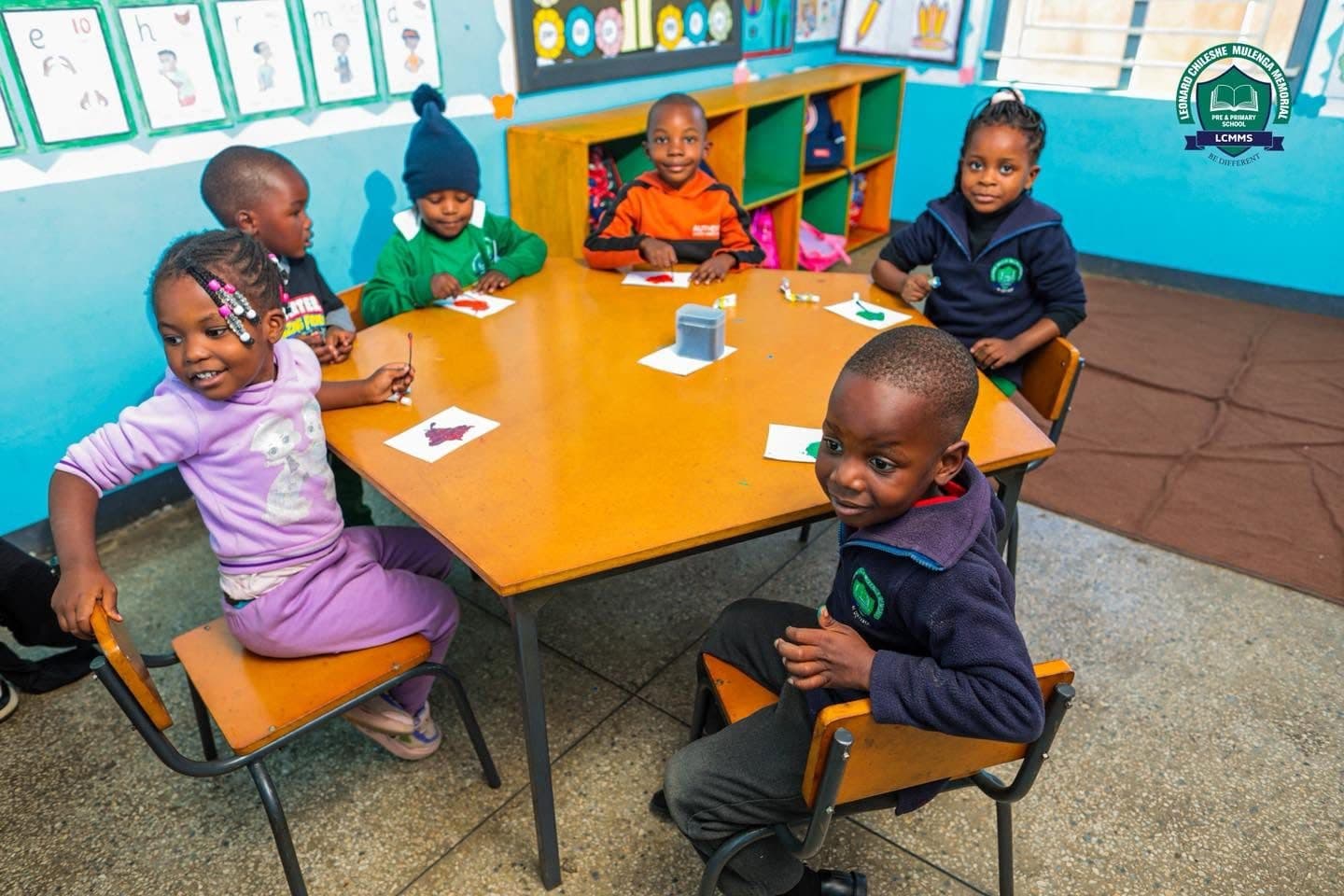
You can leave a preschool visit with photographs of a colourful classroom and still know very little about your child's day. Who notices when a child is unusually quiet? How does the teacher respond when two children want the same toy? Who checks the person collecting them? These questions belong near the top of your list when choosing a preschool in Makeni, Lusaka.
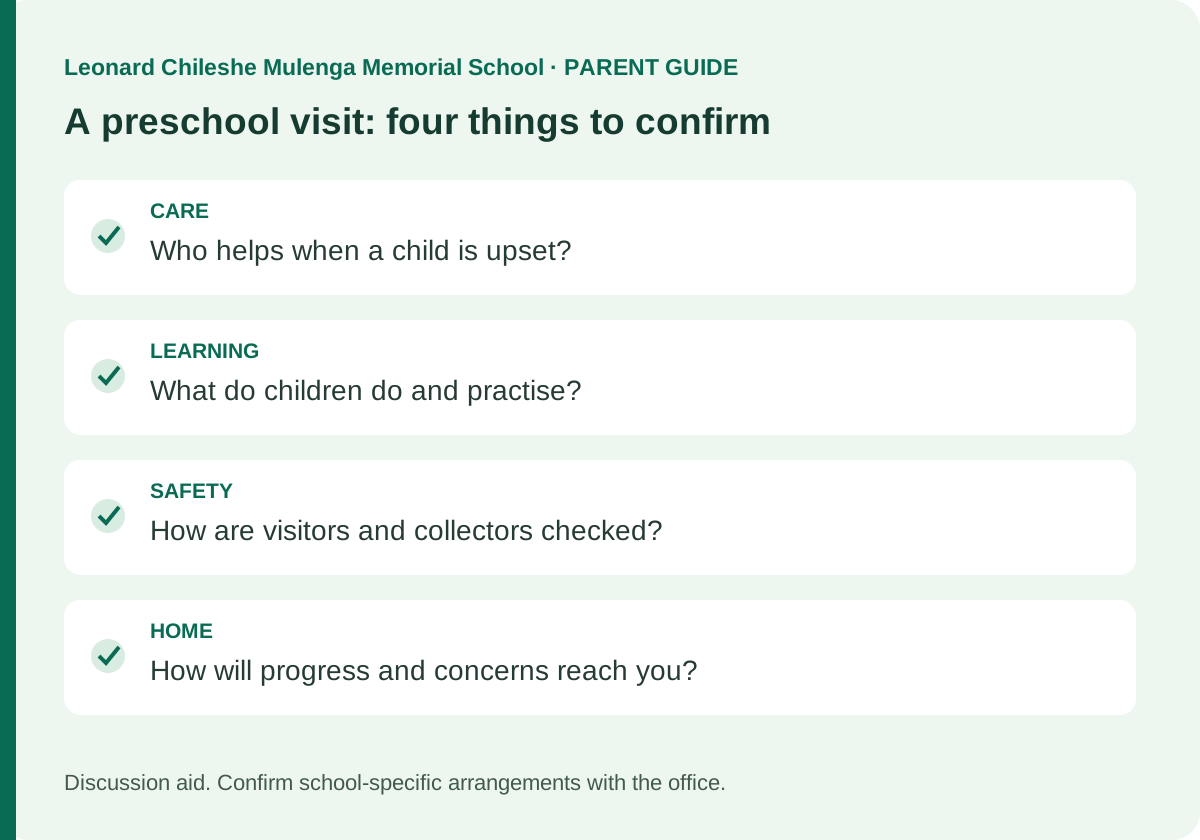
Start with three priorities: how adults care for children, what children actually do during the day, and whether the arrangements work for your family. A smart building is useful, but your decision needs evidence about everyday practice too.
Watch the interaction, not just the display
Ask whether you may observe a short activity without interrupting it. Notice whether the teacher listens, uses children's names and explains what happens next. Children should have opportunities to ask, try, make mistakes and receive help. A perfectly silent room does not automatically mean better learning.
Ask how the school responds to hitting, biting, tears or refusal to join in. A useful answer describes what an adult does, who supervises the other children and how parents are informed. “We handle it” leaves too much unexplained. Ask for an explanation of the procedure, without requesting another child's private story.
For example, imagine your child rarely speaks to unfamiliar adults. Ask how the teacher would help them communicate that they need the toilet or feel unwell. A confident answer about reading lessons does not answer that care question. Discuss your child's communication needs before paying a registration charge.
Look for learning that children can take part in
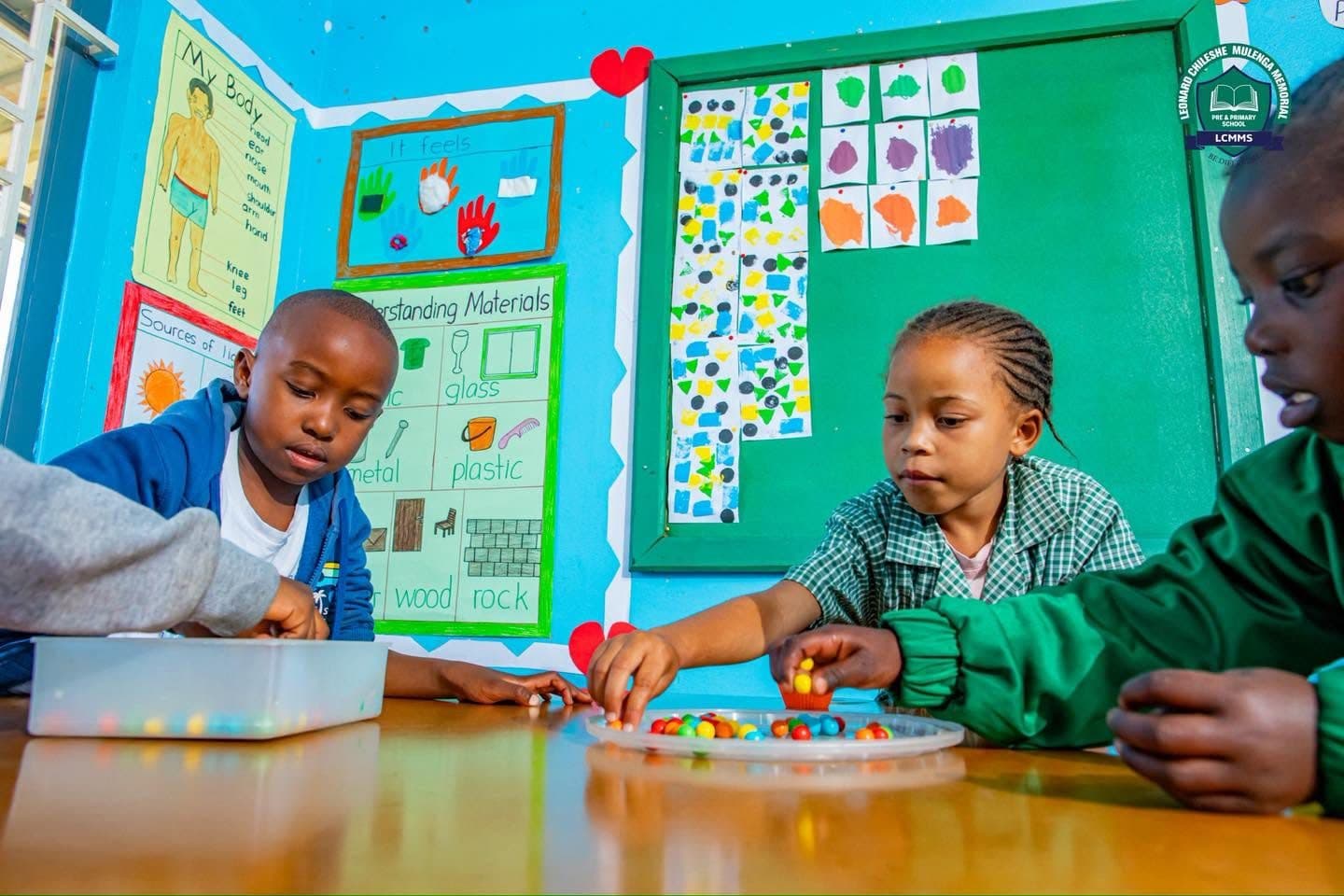
Ask what a normal morning includes. Stories, songs, drawing, sorting, movement and pretend play can give children opportunities to practise language, turn-taking and early number ideas. Ask the teacher to explain the learning in an activity rather than judging it by the number of worksheets produced.
An adult can extend a simple building game by asking which tower is taller, inviting a child to describe the design or helping two children agree whose turn comes next. These are useful questions to explore during a visit; they are not claims about a particular school's timetable.
Class names alone will not tell you the level of work. Read our explanation of Baby Class, Middle Class and Reception, then ask how the school chooses a suitable starting class and reviews progress.
Check hygiene where it is actually used
Look at the toilets and handwashing area if the school permits this. Can young children reach what they need? Ask who helps children who are still learning personal-care routines, how accidents are managed and how spare clothing is stored. Speak respectfully about support needs; a child should not be shamed for needing assistance.
Ask about drinking water, food storage, cleaning during the day and the procedure when a child becomes unwell. If your child has an allergy or another care need, establish whom to tell and what arrangements the school can actually provide. Do not assume a friendly verbal reassurance is a complete care plan.
Follow the child through the whole day
Supervision matters during arrival, outdoor play, toilet visits and collection as well as lessons. Ask how staff know which children are present and what happens when a child moves between spaces. Observe the entrance and ask how visitors are received.
Collection deserves a separate conversation. Find out how approved adults are recorded, what identification is needed and how a same-day change must be communicated. Ask about late collection before it becomes urgent. General office opening hours do not establish the supervised hours for your child's class.
As an illustration, a parent may normally collect a child but occasionally send an aunt. The practical question is not simply whether relatives may collect. It is how the aunt is authorised, how staff confirm her identity and what happens if the message arrives too late.
Take this checklist on your visit
- Observe a teacher explaining an activity and responding to a child who needs help.
- Ask which class your child would join and why.
- Check toilets, handwashing and the arrangements for personal-care support.
- Ask about supervision at arrival, playtime and collection.
- Confirm class start and collection times, including any difference by day.
- Request the procedure for changing an authorised collector.
- Ask how staff handle illness, accidents and urgent parent contact.
- Find out how progress and concerns are shared, and with whom.
- Request a complete fee schedule and list of required supplies.
- Write down unanswered questions and arrange a follow-up before committing.
Compare answers while the visit is fresh
Use the same questions at each school. Separate what you observed from what you were told and what still needs confirmation. “Teacher explained how parents receive updates” is a useful note. “Lovely atmosphere” records an impression but does not help you compare communication arrangements.
Do not let an attractive classroom outweigh an unresolved concern about supervision or respectful treatment. Equally, do not dismiss a quieter child as unsuitable because they did not perform during a short visit. Share what helps your child feel comfortable and ask how the school would work with you.
Common mistakes include comparing tuition alone, assuming a friend's experience applies to every class, and forgetting the afternoon journey. Review the school-fee budgeting guide alongside the educational questions. Ask which charges recur and which are paid only on entry.
Questions parents often ask
Should my child come on the first visit? Ask the school. An initial adult conversation can help you focus; a later agreed visit with your child can make the place more familiar. Neither should be treated as an informal admissions test.
Does a longer school day mean better value? Compare the actual activities and supervised hours with your child's needs. Extra time is only useful when suitable care is confirmed.
What should I do after choosing a school? Confirm the place, payment terms and practical arrangements, then prepare calmly. Our first-week preschool guide explains what to practise at home.
Leonard Chileshe Mulenga Memorial School offers Baby Class, Middle Class and Reception on Salim Drive. Use the Pre-School page to review the published information and contact the school to arrange a visit with your own checklist.
Back to All Articles