
The school bag is packed, but your child keeps asking whether you will stay. Preparing for preschool includes this conversation as much as buying a uniform. A familiar morning, a clear goodbye and an agreed plan with the teacher can make the first week easier to understand.
For families starting preschool at Leonard Chileshe Mulenga Memorial School, begin by confirming the practical details with the school. This guide offers home preparation ideas; it does not set the school's arrival, collection, food or settling-in procedures.
Before the first morning
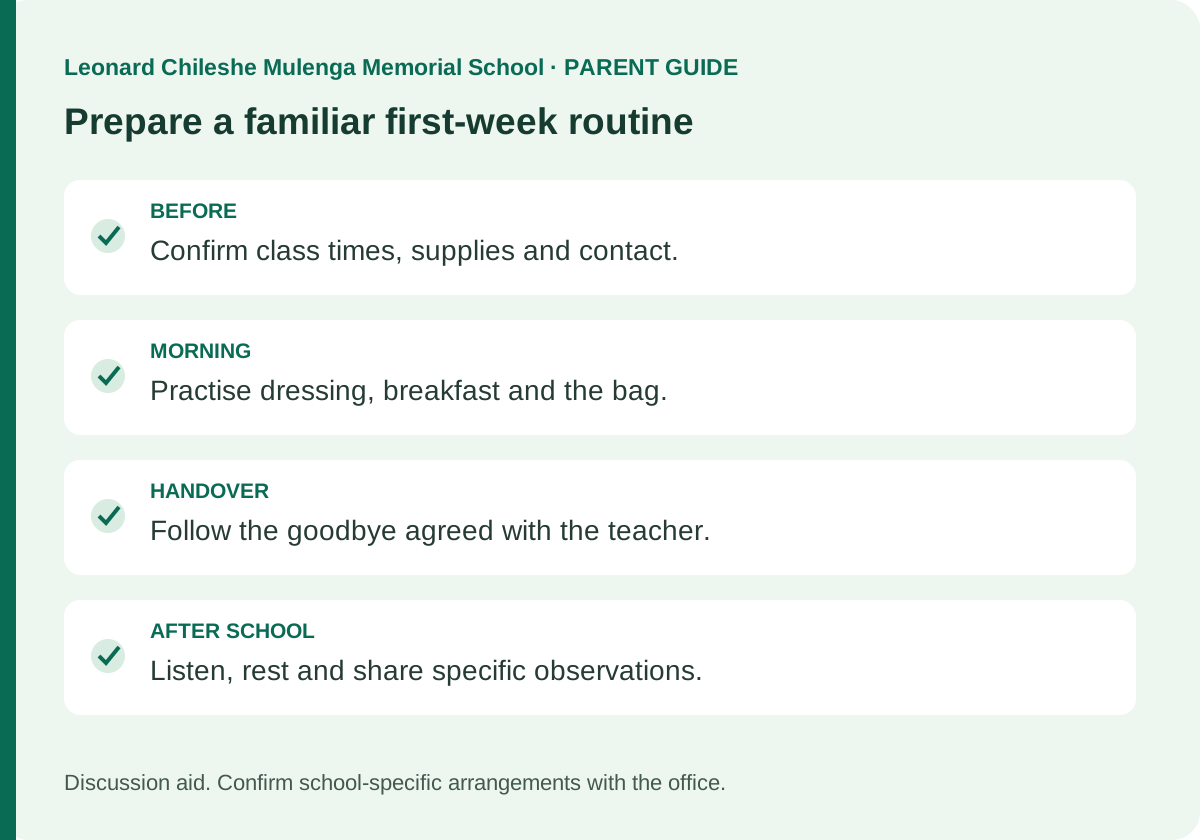
Ask the office which class your child will join, the reporting date, arrival and collection times, what to bring and whom to approach on arrival. Confirm how you should share a concern. Keep the school's contact details somewhere both the usual collector and an authorised backup adult can find them.
Use the school contact page to arrange this conversation. General opening hours should not be substituted for a class timetable. Ask whether an introductory visit with your child is possible, and follow the school's arrangements if it is.
Talk about school in short, concrete terms. Explain that there will be adults to help, other children and activities to try. Avoid promising that every moment will be fun or that a favourite friend will always be nearby. Children can enjoy school and still miss home.
Practise a morning that is possible to repeat
Try the intended waking, dressing and breakfast routine before the first day. Leave enough time for the journey and handover without making the morning a race. Prepare clothes and check the bag the previous evening where possible.
Give your child a small job they can manage, such as placing their water bottle beside the bag. If several adults share care, agree the same basic sequence. A child should not have to work out a different set of instructions every morning.
For example, imagine a child who becomes upset when hurried into unfamiliar clothing. Let them practise putting on the agreed school clothes at home, check the fit and notice difficult fastenings. That small rehearsal may reveal a practical issue before it turns into a difficult first-morning argument.
Pack from the school's list
Confirm the uniform and supplies before buying extras. The school-uniform page provides the published starting point. Ask about spare clothing, food, water containers and any restrictions. Do not send a comfort object or medication without checking the relevant arrangements first.
Choose a bag your child can recognise and practise opening it. Label belongings as advised by the school. Keep private information inside rather than displaying unnecessary personal details on the outside of the bag.
Share relevant care information directly with the responsible adult. Useful details might include the language your child uses to ask for the toilet, what helps them settle or a support need already discussed during admission. Avoid expecting a hurried handover to replace a planned conversation.
Agree a goodbye with the teacher
Ask how the school handles first-day separation and whether a parent should remain briefly or leave after handover. Follow the agreed approach consistently. Tell your child who will collect them using a familiar event or routine they can understand.
A second illustration: a child is comfortable at home but cries when the parent turns to leave. Rather than promising a reward for not crying, the parent can acknowledge the feeling and use the agreed goodbye. The teacher and parent should have already decided how they will communicate if additional help is needed.
Do not secretly disappear or repeatedly return without discussing the effect with staff. Equally, do not ignore a concern simply because someone says all children cry. Ask what happens after the handover and whether your child begins participating, eating or seeking comfort.
After school, leave room to recover
Offer a calm opportunity to eat, rest and reconnect. “What did you play with?” may be easier to answer than a long list of questions. A young child may tell you very little immediately and remember something later.
Listen without supplying an answer. If something sounds troubling, write down the child's words and contact the teacher privately. Avoid repeated questioning that pressures the child to provide a particular account. A specific concern deserves a specific follow-up.
Keep evenings manageable during the transition. Notice patterns in tiredness and mood and discuss persistent difficulties with the school. There is no universal number of days within which every child must settle.
A first-week conversation checklist
- Confirm the actual arrival and collection arrangements.
- Identify the staff contact for practical concerns.
- Agree how a different collector must be authorised.
- Share essential care and communication information privately.
- Ask what the teacher has observed after you leave.
- Compare what is becoming easier with what still needs support.
- Agree one practical adjustment and a time to review it.
If your child remains anxious
Describe what you observe rather than labelling the child. Is the difficulty limited to goodbye, or continuing through activities and collection? Ask the teacher the same question. Together, consider whether the routine, a particular interaction or an unmet need requires attention.
For severe or persistent distress, seek appropriate professional advice as well as speaking with the school. This article cannot assess an individual child's health. Do not make attendance decisions from a generic online settling-in timeline.
Common first-week questions
Should we practise formal lessons at home? Familiar routines, conversation and enjoyable play are useful priorities. Ask the teacher what would help instead of adding a demanding extra programme.
What if a relative will collect? Confirm the school's authorisation procedure in advance and ensure the relative follows it. An informal family agreement alone is not enough.
What if I am unsure about the class? Read our guide to preschool class names, then ask the school about your child's placement. The preschool checklist can help you organise any remaining questions.
The goal of the first week is to begin a workable relationship between home, child and teacher. Contact the school with specific observations, and let the agreed routine become familiar one day at a time.
Back to All Articles