

“How will you notice if my child starts falling behind?” is a more revealing school-visit question than “Do your pupils perform well?” The first asks about a process your family may need. The second can produce a reassuring answer without showing how learning is supported.
When choosing a primary school in Makeni, Lusaka, compare the teaching, communication, care and full cost of attendance. Ask the same core questions at each school, then decide which answers fit your child's needs and your family's daily arrangements.
Ask what happens inside a lesson
Find out which programme the school follows and how a typical lesson works. Ask how teachers check understanding during a task, what happens when a child finishes quickly and how help is given when someone struggles. A classroom can contain attractive resources without those resources being used effectively.
Where observation is permitted, notice whether children can explain what they are doing. Ask to see a general example of how work is reviewed, without requesting access to another pupil's confidential records. Useful evidence includes the process for giving feedback and the next step after a misunderstanding is identified.
For example, imagine a child can copy a calculation but cannot explain what it means. Ask how the teacher would identify that gap and what they would try next. This invites a more practical discussion than asking whether extra lessons are available.
Find out how progress reaches home
Ask when parents receive reports, whether meetings are offered and how concerns are raised between formal updates. Establish who should receive a message and when a parent can reasonably expect a response. A personal telephone number is not, by itself, a clear communication system.
Ask what a report explains beyond marks. Can you understand what the child manages independently, what needs practice and how home can help? If you cannot attend meetings because of work, discuss the available alternatives rather than assuming they exist.
You can also ask how the school handles disagreement. Knowing whom to approach after a classroom concern remains unresolved is useful before a problem occurs. A clear route through teacher and leadership discussions helps families avoid conflicting messages.
Discuss support before enrolment
Describe any known learning, communication, mobility or personal-care needs in practical terms. Ask which adjustments the school can provide, who coordinates them and whether any additional charges apply. General claims about inclusion should be followed by an explanation relevant to your child.
As an illustration, a child moving schools may be confident in mathematics but unfamiliar with the new reading materials. Ask how the teacher would review prior learning and plan the first few weeks. A transfer should not be treated as evidence that the child needs to repeat everything.
For a child entering primary for the first time, use our Grade 1 readiness guide to prepare observations for the discussion. Readiness and formal eligibility are related questions, but they are not identical.
Make homework expectations concrete
Ask what homework is intended to achieve, how often it is set and what parents should do when a child cannot complete it. Should you correct errors, record the difficulty or leave the teacher to review the attempt? Different expectations can create unnecessary tension at home.
Ask whether tasks require printing, internet access or materials that are not supplied. A family should know these practical demands before committing. If your child spends a long time on work that was expected to be short, record what happened and discuss it rather than completing it for them.
Look beyond the classroom door
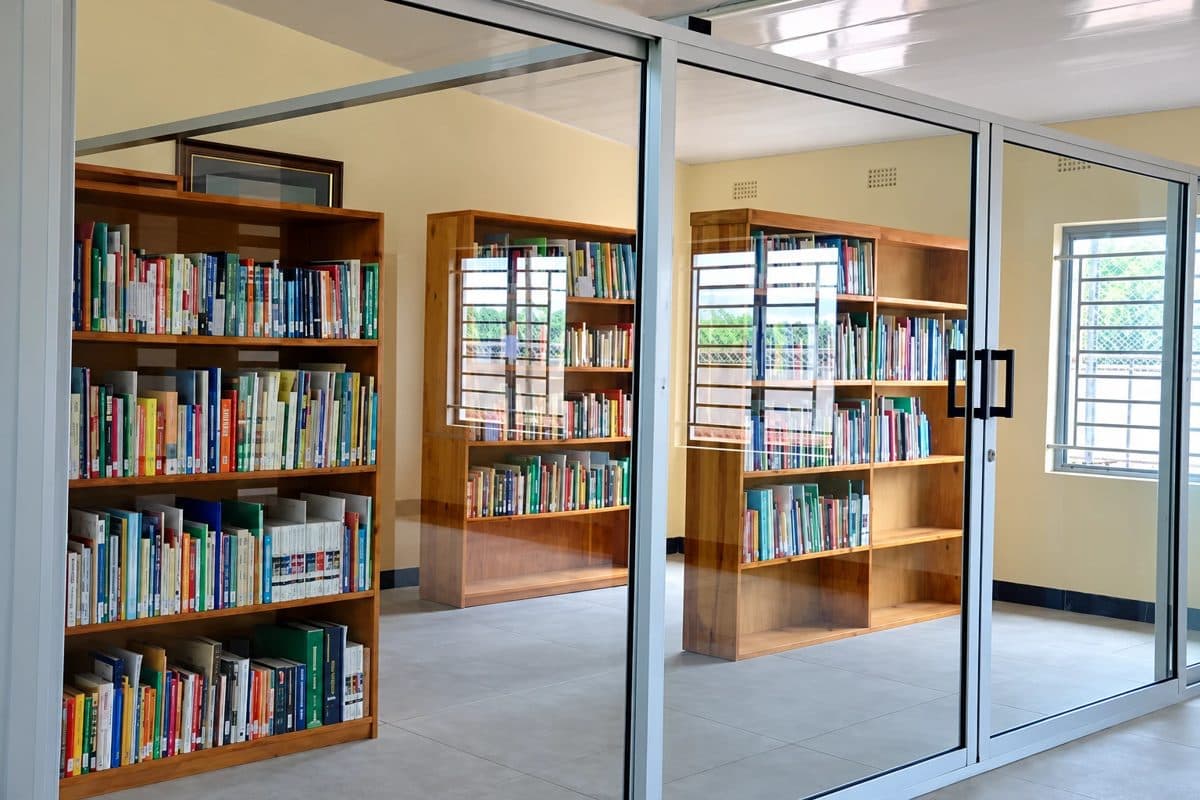
Check how arrival, breaks, toilet visits and collection are supervised. Ask how visitor access is managed and how the school responds to injuries or illness. Ask how concerns about bullying or other harm are reported and followed up. Respectful treatment and a clear response process deserve more weight than decorative features.
Look at the route children use between spaces. Consider your child's age and accessibility needs. Ask which areas a visitor may see; do not enter classrooms or photograph children without permission. A visit provides a useful sample of school life, not a complete inspection.
Compare the full financial commitment
Request a current written schedule covering tuition, entry charges, uniforms, materials and any other compulsory costs. Ask what is optional. Find out when payment is due, what happens if circumstances change and what notice is required for withdrawal.
Our school-fee budgeting guide helps you separate recurring costs from first-term purchases. Avoid choosing solely on the advertised tuition figure or assuming the highest fee guarantees the best fit. Compare the services actually included and the reliability of the arrangements your family needs.
| Area | Question to use at every school | Record before deciding |
|---|---|---|
| Teaching | How is a misunderstanding identified and addressed? | A specific process or example |
| Progress | How and when will we hear about learning? | Reporting and contact arrangements |
| Support | What can you provide for my child's needs? | Named contact and agreed next step |
| Safety | How are visitors and collectors checked? | The actual procedure |
| Homework | What help should a parent give? | Frequency, materials and expectations |
| Costs | What is compulsory in the first term and later? | Written schedule and payment dates |
| Travel | Can we meet the actual class collection time? | Tested route and backup collector |
Review the answers together
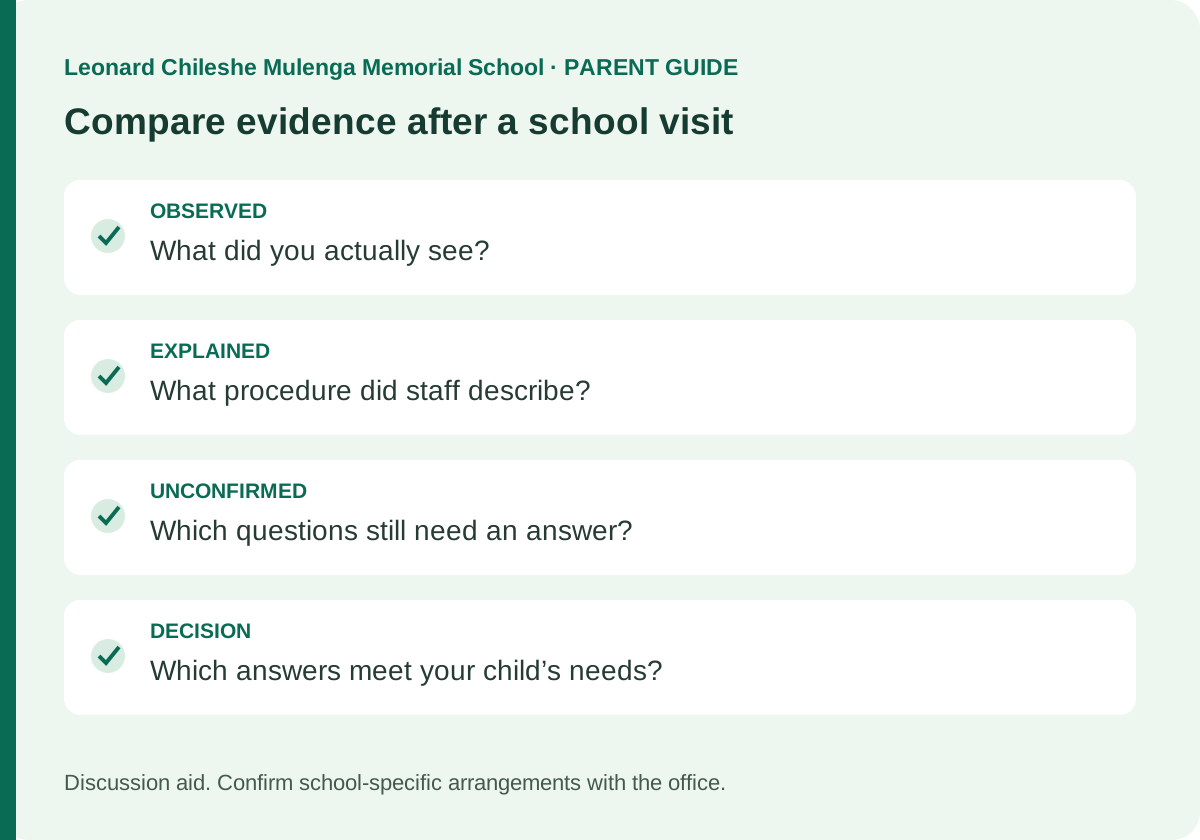
After each visit, mark each answer as observed, explained or still unconfirmed. Avoid giving every attractive feature equal weight. An unresolved collection problem may matter more to your household than an additional activity. Agree your essential requirements before comparing optional benefits.
Include your child's impressions in an age-appropriate way. Ask what felt comfortable and what they would like to know. Do not make the child responsible for a financial or educational decision that adults must take.
Before you pay
Does an interview guarantee a place? Check the school's written process. Leonard Chileshe Mulenga Memorial School explicitly says that interviewing, shortlisting or having a sibling enrolled does not guarantee placement.
Can we visit without an appointment? Arrange this with the office. A general opening-hours listing does not promise that a suitable staff member is available immediately.
Which classes does the school offer? Its Primary School page lists Grades 1 to 7. Use the visit guide to prepare questions and the admission process to confirm requirements before making a commitment.
Back to All Articles